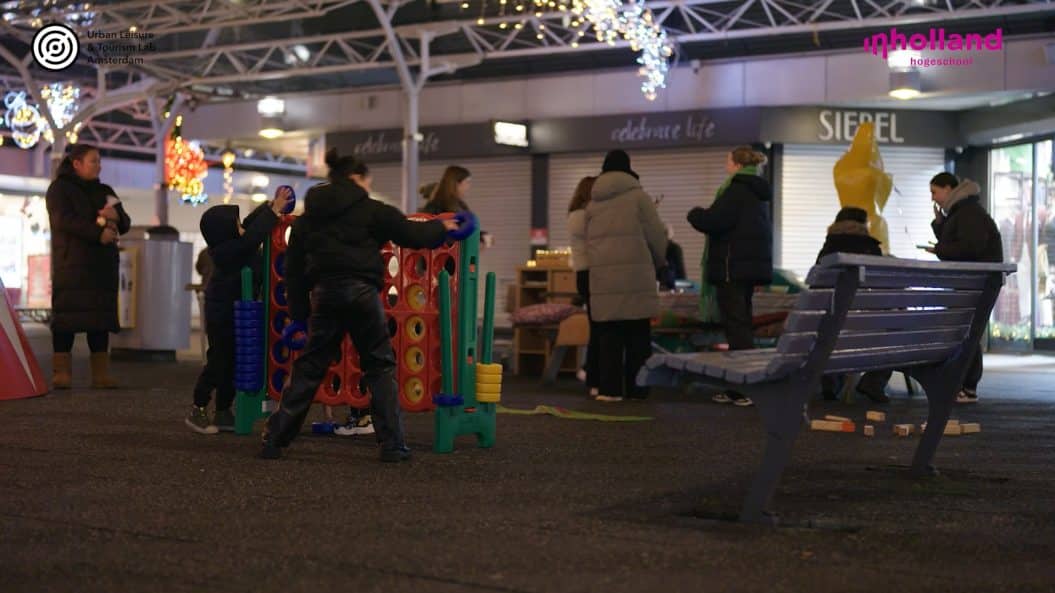
A Pop-Up Terrace as a Starting Point for Connection on the Square
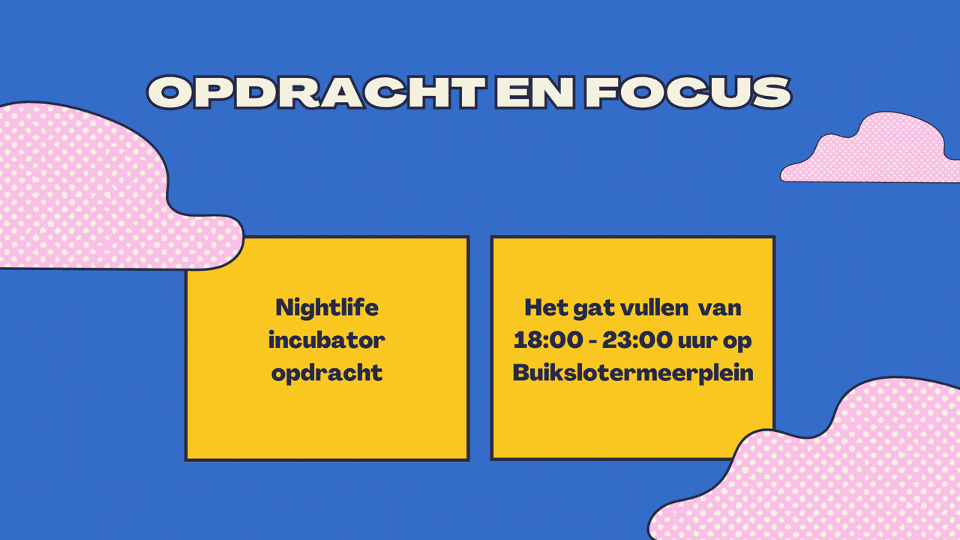
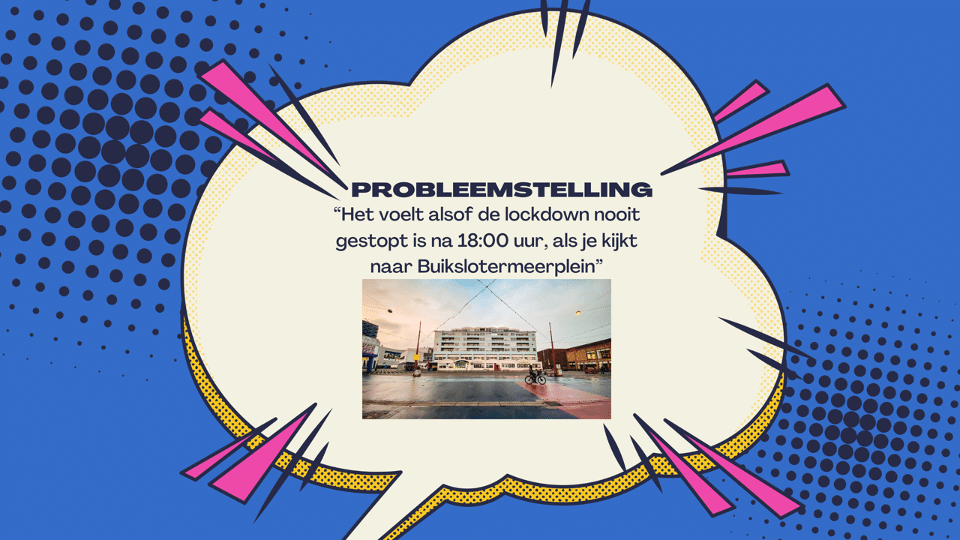
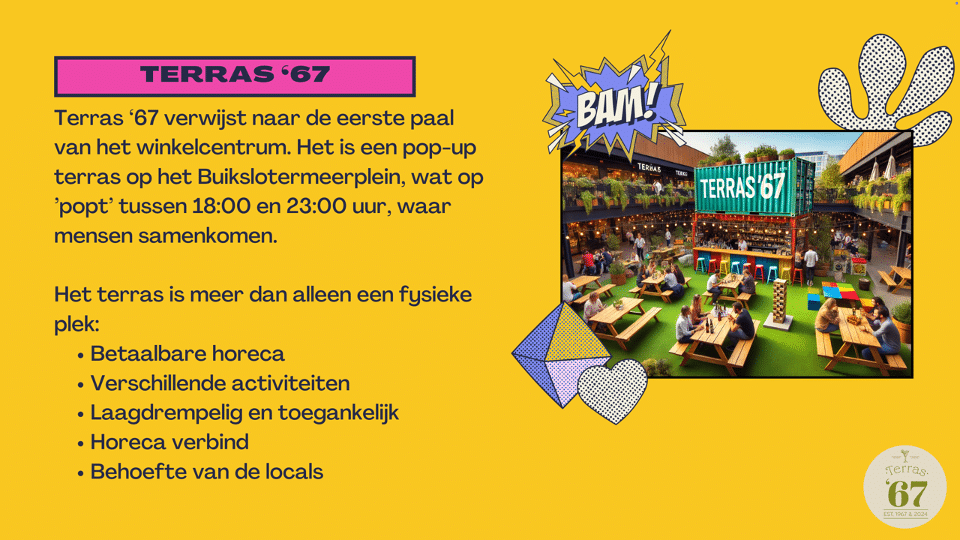
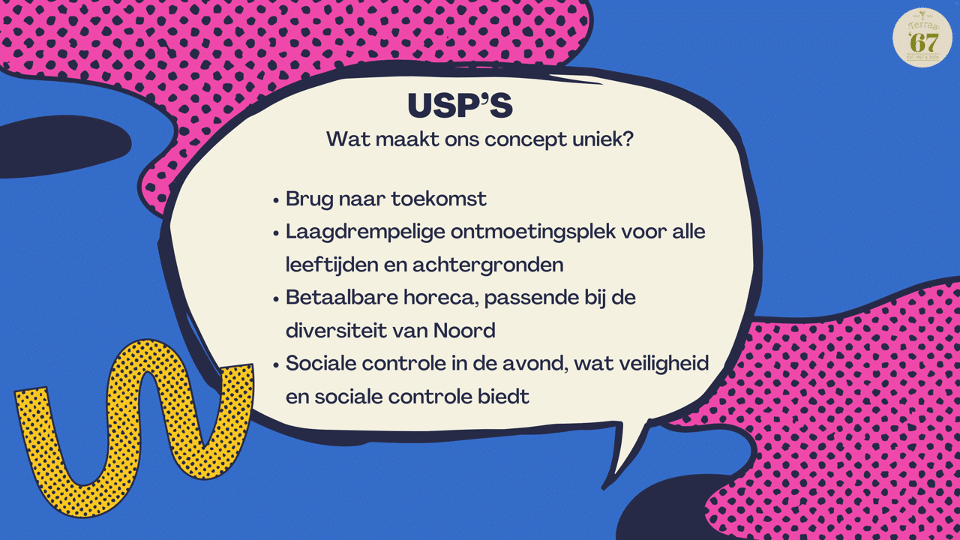
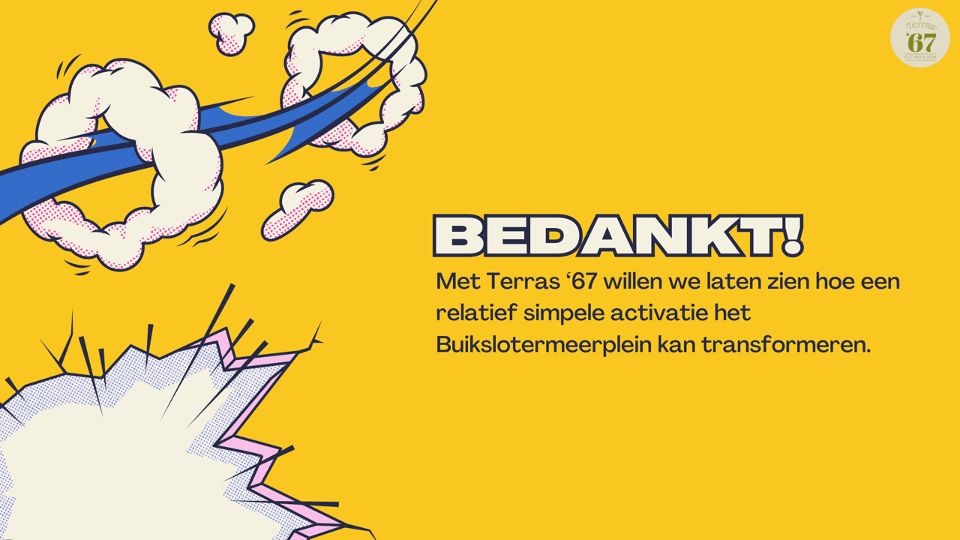
TERRAS ’67 is a concept developed by students from the Urban Leisure & Tourism Lab Amsterdam, with the aim of bringing new life to Buikslotermeerplein – and more specifically, the area near HEMA. Often seen primarily as a place people pass through, this area has the potential to become a space for connection, relaxation and a stronger sense of community.
A place that puts people first
The idea for TERRAS ’67 emerged from the observation that many people pass through the square every day, but rarely stay. There is little to encourage people to pause, connect or relax. The students asked themselves: How can we make this place feel more human?
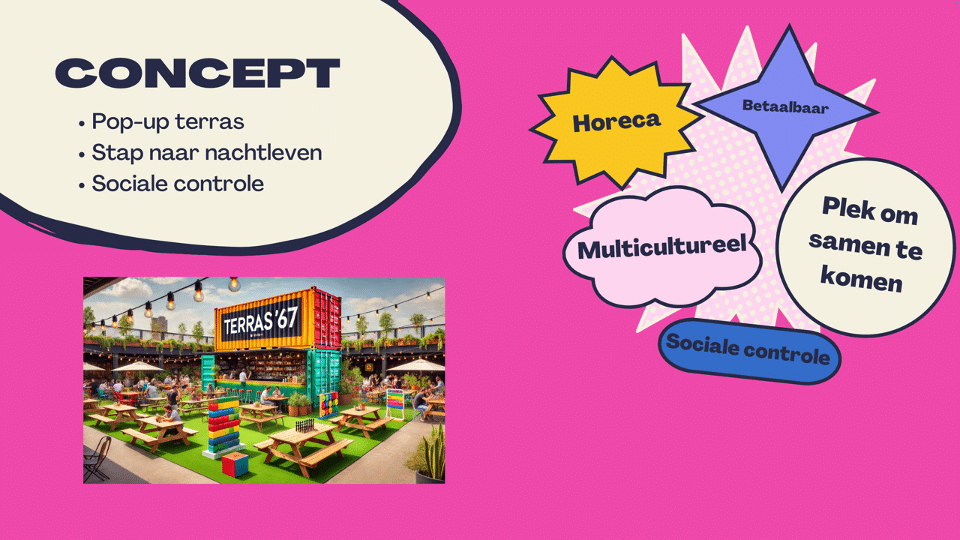
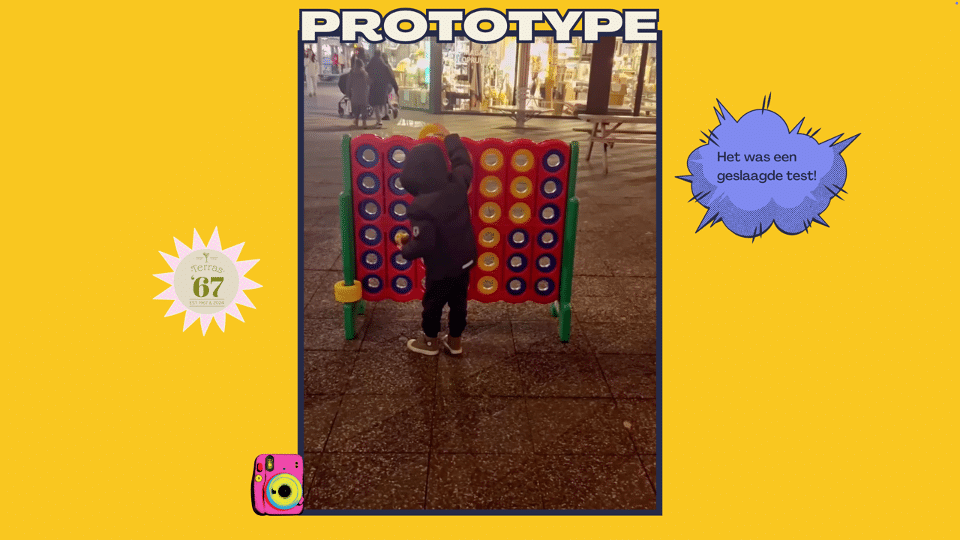
They opted for a temporary, accessible and playful intervention: a pop-up terrace designed to stimulate both visual interest and social interaction. Think bold colours, inviting seating and elements that encourage conversation and spending time together.
The process: from research to action
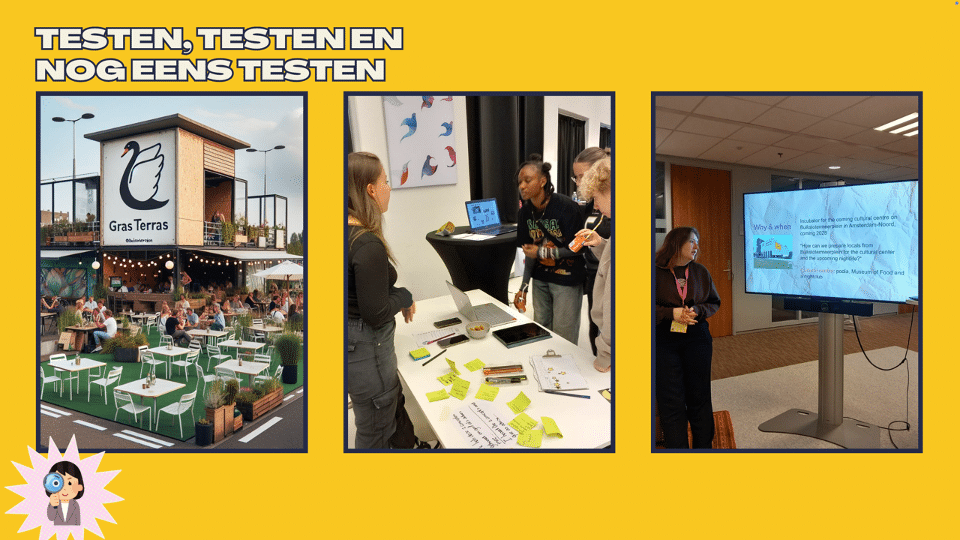
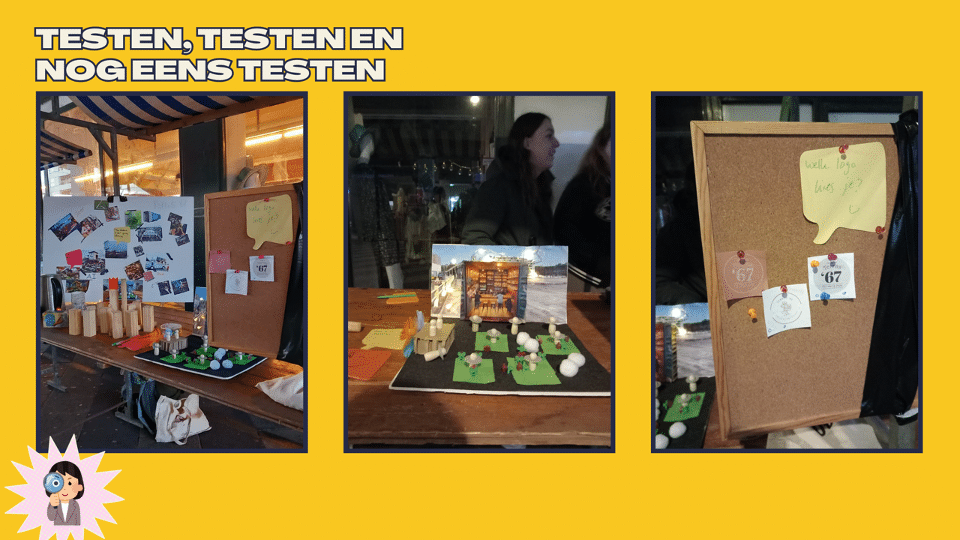
As is common practice within the ULT Lab, the students first went out into the neighbourhood. They spoke with local residents, shoppers, entrepreneurs and passers-by. What did they discover? There is a clear desire for connection and a more welcoming atmosphere on the square – but the physical environment currently offers few opportunities for this.
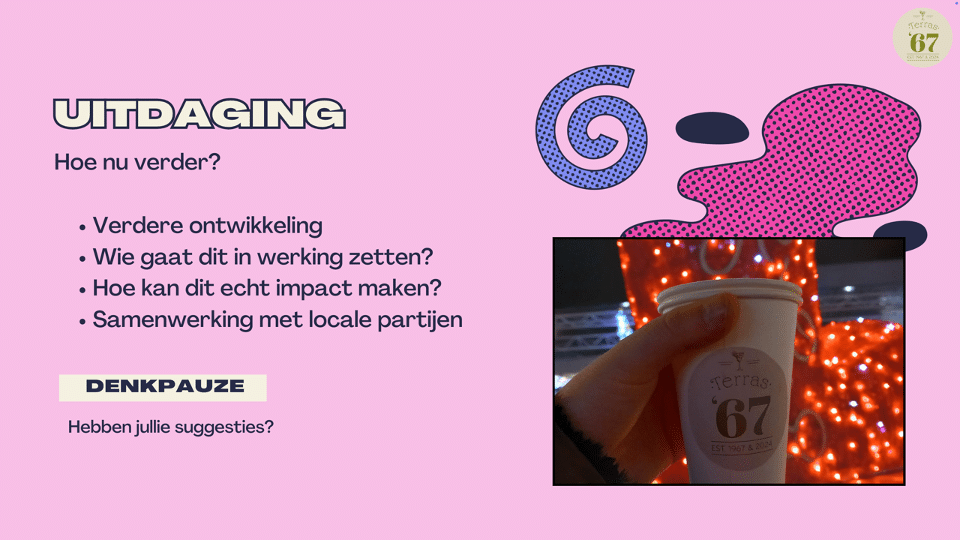
Based on these insights, the students designed a modular terrace concept that can easily be assembled, moved and adapted. The terrace is more than simply a place to sit: it acts as a social catalyst, inviting people to stay and connect.
Small touches such as a deck of cards, a vase of flowers or a tablecloth may seem simple, but they can make a world of difference in turning a space into a place where people feel welcome.